


 |
Published by Anna Zdrojewska |
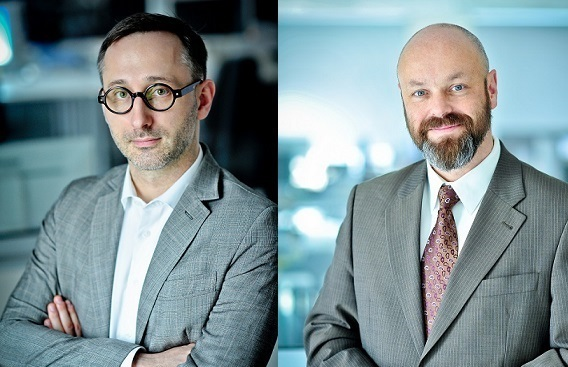
We invite you to read the interview with Mark Benio, Ph.D. and Stefan Schwarz, the organizers of the III European Labour Mobility Congress.
What will be the main subject of the political part of this year’s Congress?
Stefan Schwarz: We have decided that this will be the ongoing struggle between two fundamental values in the European Union: free movement of services and the protection of workers’ rights. On the one hand, we hear announcements that labour mobility and internal market competitiveness will be improved by eliminating barriers. On the other, the EU and Member States’ administrations are taking action which, under the pretence of protecting workers’ rights and fair competition, are rebuilding borders inside the EU market and thus make free movement of services harder or – in many cases – impossible. The direction in which the EU policy in this regard will go is of fundamental importance for the Polish economy and thousands of Polish businesses.
Has the recent Court of Justice judgement in the Elektrobudowa case impacted this choice?
Marek Benio, Ph.D.: This judgment has shown that even the Court of Justice has problems with deciding in cases in which workers’ rights clash with the freedom of services provision. The judgment is important not because of the decision itself but because it revealed that a conflict of values is, indeed, in place, but among other values than those articulated in the public debate. In this case, the Court of Justice decided largely against the brilliant opinion of the Advocate General, in which the latter emphasized the need to differentiate between the protection of the posted workers’ rights and protection of local labour markets. In the opinion of the Advocate General the value of protection of local labour markets should give way before the value of the freedom to provide services. Nevertheless, in its judgement the Court focused exclusively on protecting the rights of posted workers, ignoring article 56 of the TFEU. This judgment can easily be used by the host countries, reluctant to accept posting of workers, to discriminate foreign service providers. We will discuss this at the Congress with the representatives of the Court.
What potential threats to posting do you see in the near future?
Marek Benio, Ph.D.: We believe that the greatest threat stems from European Commission announcing the revision of Directive 96/71. What is also important is the putting the implementing directive into effect and the plans to issue a new version of the Practical Guide. Another important issue will be the correct understanding of the current legislation, including the unclear meaning of the expressions replacing a posted worker, pursuit of activities in two states within the meaning of Regulation 883/2004, significant activities and minimum rates of pay within the meaning of Directive 96/71. These are the most important issues for all the companies that post workers.
Who will be the special guest of this year’s Congress?
Participation in the Congress was confirmed by Marianne Thyssen – the new EU Commissioner for Employment, Social Affairs, Skills and Labour Mobility. Her presence is a unique opportunity for the entrepreneurs to meet with the person responsible for all the decisions of the European Commission concerning the posting of workers until 2019.
We are honored as well to host at the Congress prof. advocate Maciej Szpunar – the Advocate General of the Court of Justice of the EU, who served in the past as a representative of the Polish government in numerous cases before the European Union judicature, including the most important cases concerning the posting of workers, such as C-115/11 (Format) and C-522/12 (Isbir). As in previous two editions, the Congress will host Ms Danuta Jazłowiecka, this time thought not as the rapporteur of the posting of workers Enforcement Directive, but as the Vice-President of the Committee on Employment and Social Affairs in the European Parliament. The Congress will host as well the predecessor of Commissioner Marianne Thyssen – Mr. Laszlo Andor. Many other distinguished guests, who we have not outlined here, will honour us with their presence. The full list of speakers is available on the event website.
What benefits do posting companies reap from participating in the Congress?
Stefan Schwarz: For many years, access to reliable knowledge about legal posting was very limited in Poland. Commercial consultants and trainers profited from the fear and ignorance of entrepreneur’s, who frequently unwittingly breached complicated and ambiguous provisions of the labour or social security law. The Congress is a unique event in this regard and can change the situation. Participants gain the specific knowledge on the applicable rules, their correct interpretation and current guidelines for the offices. This knowledge, which can be invoked in the daily operations of the company, because its source is denouncing the authorities on behalf of major Polish and European institutions. For the companies posting workers the Congress give answers to questions and solutions to the problems that the companies cannot find anywhere else.
I see, but what specifically can businesses expect from this year’s Congress?
Stefan Schwarz: On the first day, called the political day, businesspeople will learn what changes they can expect in the future. This is important because they will have time to prepare for such changes. On the second, the expert day, outstanding lawyers and administration representatives will take up the toughest practical challenges concerning the correct understanding of regulations. Traditionally, we will devote a lot of attention to the replacement of a posted employee, pursuing activities in two states, significant activities and minimum rates of pay. These regulations will be analyzed using practical cases reported to us by members of the LMI and entrepreneurs participating in the event.