

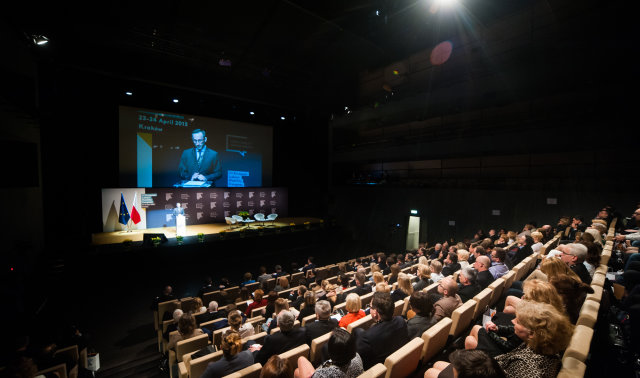
Service companies from “new Europe” countries will soon lose their competitiveness on the internal market of the EU. A new revision of the Posting of Workers Directive will increase the costs incurred by Polish entrepreneurs engaged in provision of services in countries like Germany or France up to 30% in proportion to local companies. Participants of the IV European Labour Mobility Congress warn that many companies will go bankrupt and thus endanger thousands of workplaces. It will affect several branches – ranging from engineering, construction and ICT, BPO to transport services.
The final version of EU provisions on posting of workers, employees who perform work in another Member State on a temporary basis, is most likely to be known in March 2017. It concerns tens of thousands of businesses across Europe, where every fifth employee comes from Poland. The draft of the amendment has raised concerns since the very beginning. According to the participants of European Labour Mobility Congress taking place in Krakow, the revision is based on perceptions counter to the facts, violates Treaty on European Union and treats employers from low-wage countries unfairly.
– Under the banner of equalization of working conditions in Europe new wall between countries od Old and New Europe is being built. Brussels attempts to satisfy French and Belgian populists who perceive Polish service companies as a main source of its economic problems. It is sad, because this is the moment when Europe is in the great need of unity, cooperation, strong and competitive internal market – says Stefan Schwarz, President of the Labour Mobility Initiative Association – The European Commission’s draft amendment will exclude Polish service companies from the European Internal Market. Countries like Bulgaria, Czechia, Denmark, Estonia, Croatia, Hungary, Latvia, Lithuania, Romania and Slovakia share a similar problem. For the first time in history, EU Commission has ignored the yellow card procedure triggered by abovementioned countries. It has ignored also the results of researches, which, including those conducted on its own commission, indicated that our workers are neither cheaper nor endanger workplaces for the local specialists –the Organizer of the Congress emphasizes.
Today the entrepreneurs, academics and representatives of nongovernmental organizations meet with Marianne Thyssen, responsible for the amendment in order to present their counterarguments. New regulation will impose a number of obligations on Polish employers concerning, inter alia, remuneration, bonuses and allowances such as those received by local specialists and in case of a long-term work performed abroad, posted worker would perform it under the regulations of local labour law. It will involve additional formalities, huge administrative costs, legal and translation charges. Negative aspects of the amendment will actually burden a worker – he will be obliged to familiarise himself with the rules of law of receiving State and be entity under jurisdiction of foreign labour courts.
– Companies posting workers abroad have been already bearing number of additional costs associated with travel, accommodation, food, legal services, translation and employment of local representative in every country where services are provided. The research conducted by Marek Benio PhD shows that it represents 28% of total costs of the service. By adding the equalization of remuneration, additional burdens such as local allowances and administrative burden associated with it, services provided by our companies would become considerably more expensive than the local ones. Polish companies will lose their clients – explains Robert Lisicki, expert of Konfederacja Lewiatan.
Is there any chance to persuade Commissioner Thyssen and officials from the EU institutions to change the direction of an amendment?
– We strongly believe, that the door for dialogue is still open. This is the intention of the today’s meeting with Commissioner Thyssen – says Stefan Schwarz – We do understand the Commission’s and Trade Unions’ arguments. Abuses of law certainly happen – competent institutions should effectively combat them. At the moment of the decision of the actions, researches showing that posting of workers contributes positively to local markets. We hope that, with the help of votes of over one-third of Member States, Scandinavian and European trade and employers’ unions (like ETUC, BusinessEurope, CEEP and UAPME), we will persuade EU institutions to conduct comprehensive public consultations and review its approach.
The draft of the directive amendment is currently being negotiated in the course of trialogue between European Commission, Parliament and Council of the European Union. The position of entrepreneurs, politicians and workers still counts. One of the main aims of the Congress is to draw attention to social and economic effects of the draft amendments.
***
About the Congress and Labour Mobility Initiative
The European Labour Mobility Congress is the biggest annual event in Europe dedicated to the posting of workers in the framework of the provision of services. It provides a platform for the exchange of knowledge and experience of all parties interested in the subject of the posting of workers ranging from business representatives, non-governmental organisations, institutions, as well as academic and legal experts. Representatives of the European Commission, the European Court of Justice, the European Parliament, the Polish Social Insurance Institution and the Chief Labour Inspectorate will take part in the Congress as experts.
The organizer of the Congress is Labour Mobility Initiative (LMI), an association which brings together representatives of academic, business and administration environments , dealing with posting of workers issues and a legal mechanism that allows Polish companies to provide services in other Member States. This year LMI and the University of Economics carried out researches, whose results have demolished a common stereotype that posted workers from Poland are cheap workforce. In fact, they earn approximately over 2,33 EUR net per hour more than minimum rates of pay in receiving countries. Moreover, their employers bear additional administrative costs up to 32% of total cost, not imposed on local companies.
Find further information on the Congress at www.elmc.eu
Thank you for leaving us your email address